
Low-Glare HPL for Retail and Hospitality
2026-09-23
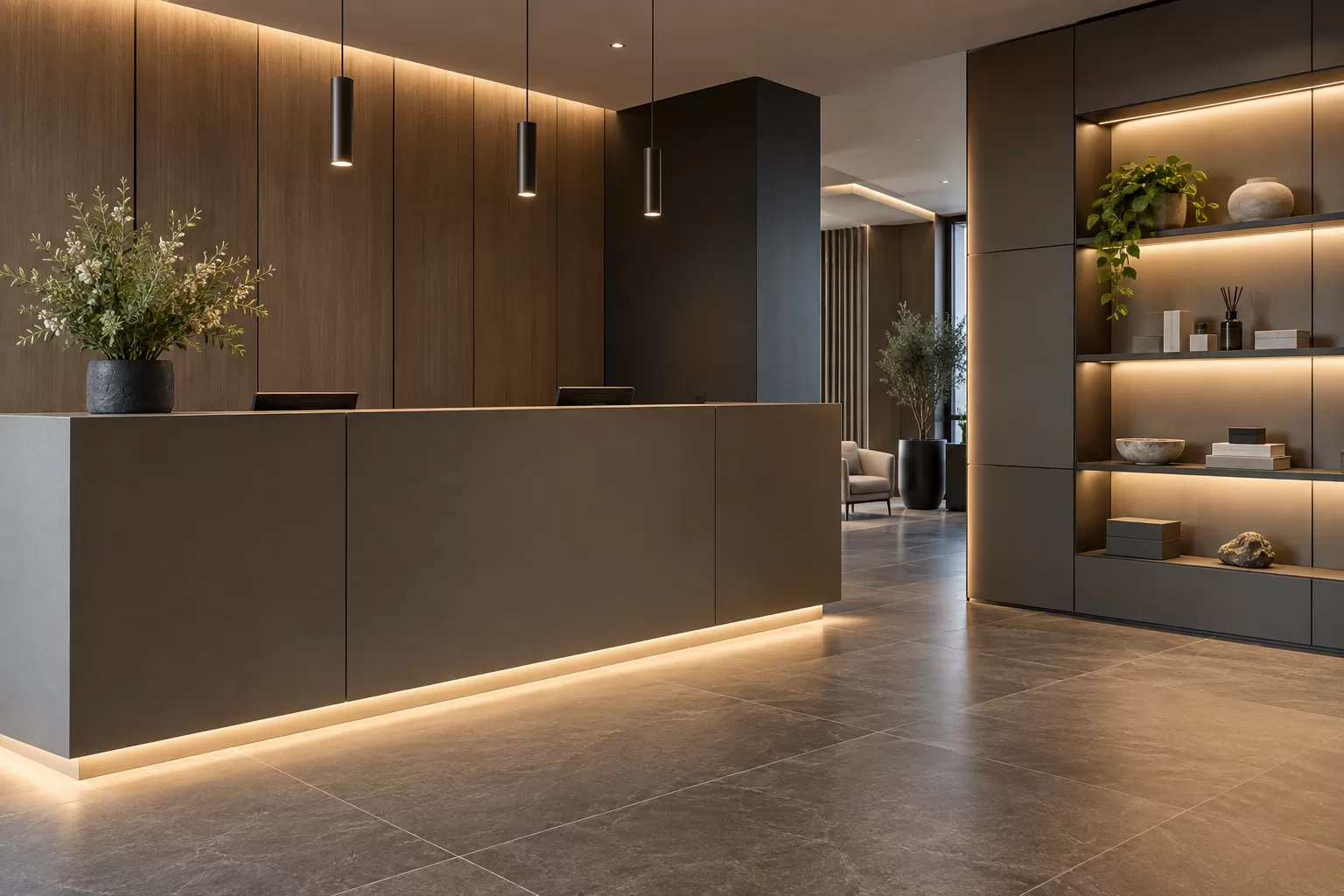
Low-Glare HPL for Retail and Hospitality
Low-glare HPL can make a retail counter, hotel reception, restaurant wall, or display surface feel calmer under strong lighting. It is not a single specification, however. Appearance depends on gloss level, texture, color, light source, viewing angle, installation quality, and cleaning routine. A useful brief therefore describes the finished environment and the evidence needed before an order is released.
Start with the visual problem
Define where reflections are distracting: a cashier line, a food-service front, a guest-room vanity, a lift lobby, or a backlit display. Note typical sightlines, daylight, track lights, linear LEDs, and changing brightness through the day. Low-glare is a visual objective, not a promise that a surface will look identical under every luminaire. Dark colors, directional textures, and large uninterrupted panels can make grazing reflections or touch marks more noticeable. Ask the design team to review a large enough sample from normal customer and staff viewpoints.
Compare gloss, texture, and color as one system
Matte and textured surfaces often reduce obvious reflections, but texture also affects how dust, oil, and cleaning residue appear. A smoother low-glare face may be easier to wipe, while a deeper texture may support a particular design language but require more attention to the cleaning method. Color changes perception too: very dark or saturated tones can reveal fingerprints and edge variation; pale tones can reveal soiling or joint contrast. Compare candidate finishes side by side, with the same light source and camera position, and record the approved color, texture direction, edge detail, and panel orientation.
Do not equate low-glare with anti-fingerprint
Low-glare describes how a surface manages reflected light. Anti-fingerprint describes a different surface behavior: how visible marks form or how easily they can be removed. A material may be low-glare without being anti-fingerprint, or anti-fingerprint without delivering the desired appearance under a particular light. Treat the two requirements separately in the specification. If both matter, ask for evidence for each and inspect them on the same representative color and texture. Do not substitute a marketing label for a project test, and do not infer a performance level from a product name alone.
Check lighting with a realistic mock-up
Lighting can change the result more than a small sample suggests. Build a mock-up using the planned luminaires, mounting distance, adjacent colors, joints, edge profiles, and typical viewing angles. If the project has daylight, review it at more than one time or brightness condition. Photograph the approved setup for internal comparison, but keep the physical sample as the reference because cameras and screens can alter color and contrast. Confirm that the mock-up is representative of the proposed production batch and that replacement panels will follow the same orientation and layout rules.
Test cleaning before approving the finish
Retail and hospitality surfaces are cleaned frequently, but the actual products and methods vary by operator. Test the intended cloths, detergents, dilution, dwell time, wiping direction, and drying practice on the selected color and texture. Look for residue, visible wiping marks, change in appearance, and soil trapped in the texture. Include a simple before-and-after record and agree what would trigger a review. A cleaning test is not a certification or a guarantee of service life; it is a practical way to check whether the proposed maintenance routine is compatible with the selected surface.
Use a disciplined procurement brief
A purchasing request should identify the application, panel size, edge and joint details, expected lighting, cleaning routine, approval sample, packaging, storage, and replacement-lot controls. Ask suppliers to identify the exact product code, finish, color, texture direction, available sample size, and any preparation or installation constraints. Separate mandatory requirements from preferences. Where a claim depends on a certificate, test report, or regulatory statement, request the relevant document and match it to the exact product and intended use. Do not assume that a general statement applies to every color, thickness, batch, or fabrication method.
Design and purchasing checklist
- Have we defined the viewing zones, luminaires, daylight conditions, and adjacent materials?
- Have we compared gloss, texture, and color on a representative sample rather than a screen image?
- Have we kept low-glare and anti-fingerprint as separate requirements?
- Have we completed a project-lighting mock-up and recorded the approved orientation and joint layout?
- Have we tested the real cleaning products and documented the acceptance condition?
- Have we checked product code, batch control, edge details, installation limits, and replacement strategy?
For initial product research, review the Decorative HPL Laminate Sheet range and compare the anti-fingerprint HPL surface option with the project brief; anti-fingerprint is a separate requirement and is not synonymous with low-glare. Case material can help the team discuss layout and finish decisions; review the commercial and retail applications and hotel applications as starting points, then confirm that the shown application, color, and lighting are comparable to your own.
Make the approval decision traceable
Before production, retain the approved physical sample, mock-up photographs, product code, color and texture description, cleaning notes, and sign-off from design, purchasing, and installation. A cautious request for quotation can then ask the supplier to confirm what is being offered and identify any difference from the approved reference. If you need help comparing options, send the application, lighting conditions, target color, cleaning routine, and sample requirements for a focused discussion. Final selection should follow the project’s engineering, safety, accessibility, and regulatory review.