
CNC Fabrication of HPL and Compact Laminate: Reducing Chips and Cracks
2026-09-23
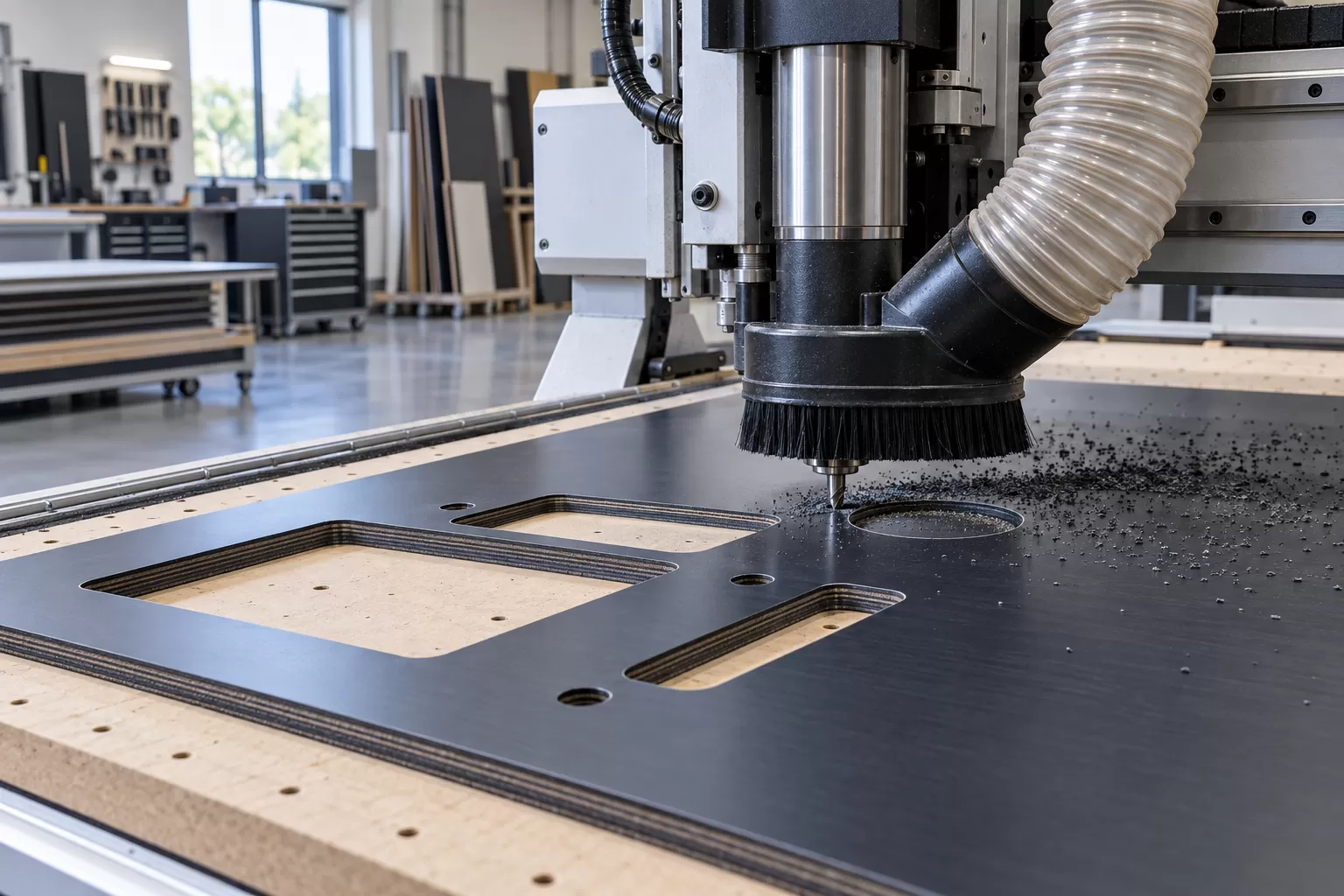
CNC Fabrication of HPL and Compact Laminate is not a one-variable purchasing decision. In high-pressure laminate and compact laminate projects, material choice, equipment settings, operating conditions and downstream construction interact. A specification that lists only a product name or one headline value can leave important risks unresolved. This guide organizes the questions that buyers, engineers and suppliers should review before approving a trial or production order.
The aim is not to prescribe one universal design. Different applications can justify different limits, and final performance often depends on the complete system. Use the following framework to define service conditions, request comparable evidence and validate a representative finished article. Do not treat general guidance as a substitute for project-specific engineering, safety or regulatory review.
Match Tooling to Material and Thickness
Thin HPL sheets, bonded panels and solid compact laminate require different cutting strategies and chip evacuation. For project teams, this point should be converted into a written requirement rather than left as an informal expectation. Consider normal production, startup, shutdown, cleaning, storage and foreseeable upset conditions, because the most demanding combination may not appear during a short demonstration.
Confirm tool geometry, condition and manufacturer guidance, and trial the full thickness and decorative surface before production. Ask the supplier to state the method, sample preparation, tolerance, inspection frequency and action taken when a result drifts. When finished-system performance is involved, confirm it with a representative production trial and keep the approved sample and records for later lot comparison.
Support the Panel and Control Vibration
Poor vacuum hold-down, uneven sacrificial boards or unsupported offcuts can cause chatter, breakout and inaccurate dimensions. The practical risk is that a single laboratory value may not represent production variation, installation details or real operating conditions. Consider normal production, startup, shutdown, cleaning, storage and foreseeable upset conditions, because the most demanding combination may not appear during a short demonstration.
Check machine bed flatness, vacuum zones, part tabs and toolpath sequence for each component size. Ask the supplier to state the method, sample preparation, tolerance, inspection frequency and action taken when a result drifts. When finished-system performance is involved, confirm it with a representative production trial and keep the approved sample and records for later lot comparison.
Manage Feed, Speed and Heat
Excess heat can dull tools and discolor edges, while unsuitable feed can increase chipping or tool load. A useful specification connects the intended service condition to evidence that both buyer and supplier can review consistently. Consider normal production, startup, shutdown, cleaning, storage and foreseeable upset conditions, because the most demanding combination may not appear during a short demonstration.
Establish settings through controlled trials and monitor edge quality, sound, dust extraction and tool wear rather than copying one universal recipe. Ask the supplier to state the method, sample preparation, tolerance, inspection frequency and action taken when a result drifts. When finished-system performance is involved, confirm it with a representative production trial and keep the approved sample and records for later lot comparison.
Design Holes and Internal Corners
Sharp internal corners and holes too close to edges create stress concentrations that may crack during assembly or service. This is also a communication issue: design, purchasing, production and maintenance teams should use the same definitions. Consider normal production, startup, shutdown, cleaning, storage and foreseeable upset conditions, because the most demanding combination may not appear during a short demonstration.
Use appropriate radii, pilot procedures, clearances and edge distances, then deburr without damaging the decorative face. Ask the supplier to state the method, sample preparation, tolerance, inspection frequency and action taken when a result drifts. When finished-system performance is involved, confirm it with a representative production trial and keep the approved sample and records for later lot comparison.
Inspect Before Assembly
Small cracks, chips or dimensional errors can grow when hardware is tightened or panels are forced into position. For project teams, this point should be converted into a written requirement rather than left as an informal expectation. Consider normal production, startup, shutdown, cleaning, storage and foreseeable upset conditions, because the most demanding combination may not appear during a short demonstration.
Use good lighting, gauges and a defined defect standard, and isolate damaged parts instead of hiding defects with hardware. Ask the supplier to state the method, sample preparation, tolerance, inspection frequency and action taken when a result drifts. When finished-system performance is involved, confirm it with a representative production trial and keep the approved sample and records for later lot comparison.
Building a Reliable Procurement Brief
A good procurement brief for high-pressure laminate and compact laminate projects should identify the application, operating envelope, interfaces, required evidence and acceptance process. It should also separate mandatory criteria from preferences. This makes supplier responses easier to compare and prevents an attractive but incomplete data sheet from becoming the only basis for a technical decision.
Before release, review the brief with the people who will process, install, operate and maintain the product or equipment. Resolve ambiguous terms, name the reference standards and agree how deviations will be handled. A small, well-documented trial usually provides more useful evidence than a large order based on assumptions.
Conclusion
Changzhou Sunplus Decorative Fireproof Materials Co., Ltd. recommends matching specifications to the real application and confirming critical points through representative samples or trials. Buyers should evaluate complete-system behavior, process consistency, traceability and maintainability alongside nominal specifications. This disciplined approach supports clearer quotations, smoother approvals and fewer surprises during production or operation without relying on unsupported performance claims.